
The kitchen is the heart of every home, evening meals are prepared, stories of the day told, cups of coffee made and glasses of wine poured. But what good is a kitchen if it is not practical as well as beautifully designed?
Of course the aesthetics of the kitchen are very important but the functionality is even more so. We must ensure that our kitchens make day to day living easier and stand the test of time!
So what are the most important considerations when planning and designing your kitchen renovations?
Firs and foremost, know your budget! There are many price points when it comes installing your kitchen, from worktop material, units, appliances, sinks and taps. Think about what areas you would like to spend the highest proportion of your budget on carefully.
If you are looking for a quick and easy freshen, and your current cupboard carcasses are in good condition – Why not look to modernise the doors and handles, this will be a fraction of the cost of an entire kitchen but will allow you to inject a new lease of life. However if you are replacing the whole kitchen, here are some points to consider.
Worktops
The work top is where you can splash out or go for a more budget option. It is important to consider your long term plan for the property. If this is your forever home the work top is an area you will find benefit from spending a little extra on. However if you sprucing up a property to sell, or for the rental market, it may be something that being budget friendly outweighs the high end look.
So lets explore some options for the worktops you may wish to consider.
Solid surfaces, such a Corian are made from an advanced mixture of natural minerals and pure acrylic polymer and offer a smooth, durable surface. With a wide variety of colour and finish options available, you are certainly able to find a product for most schemes.
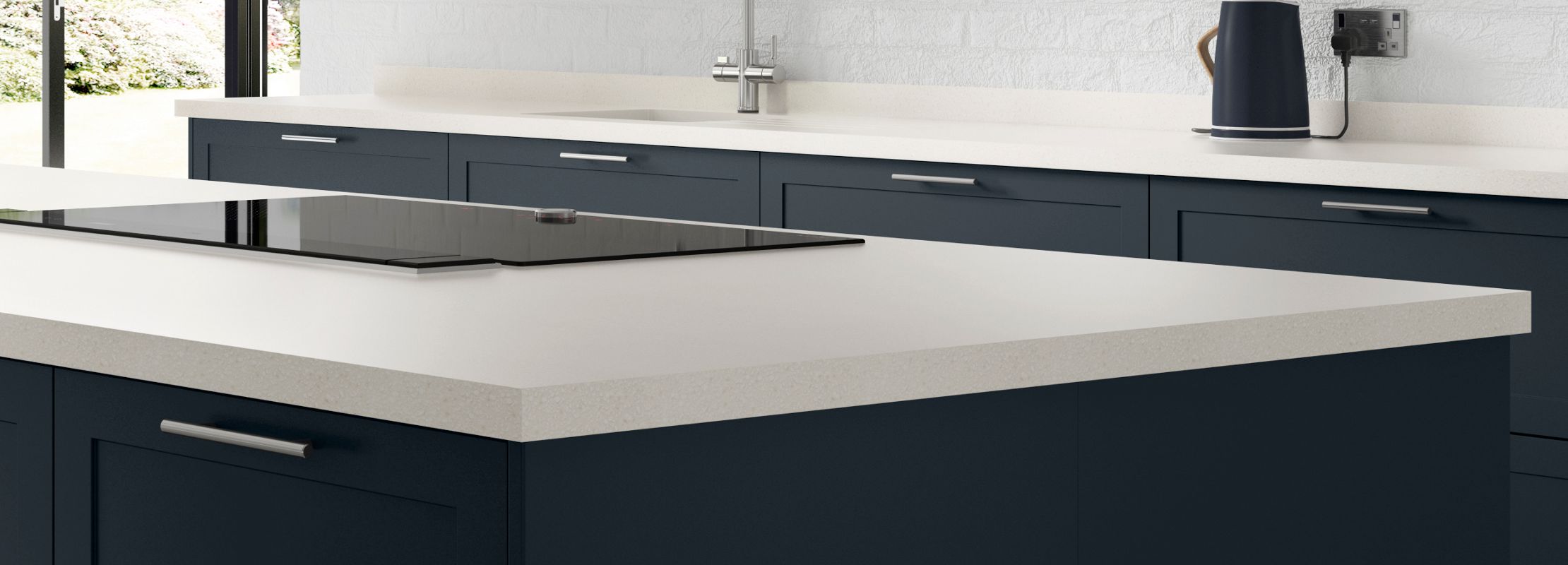 As the work top is templated and cut to size from a large slab you avoid any unsightly joins. Solid surfaces are extremely durable, any small scratches can typically be polished out with the appropriate products and small chips can often be rebuilt with a resin mix. However you do need to be careful with hot pots and pans, as these can burn and leave a mark on the surface. We definitely recommend investing in some wooden or cork boards to protect your surfaces!
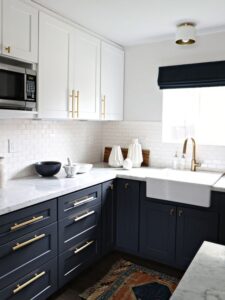
Engineered stone, made from a high percentage of crushed quartz mixed with a resin, such as Silestone and Caesarstone, a more ‘stone-like’ material than a solid surface worktop.
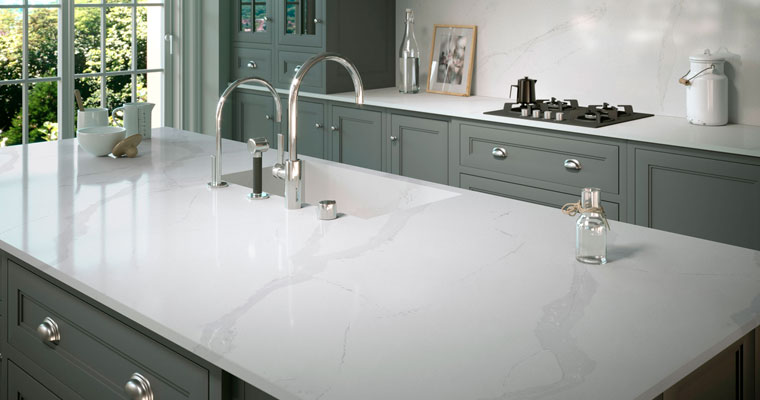
Made with 94% natural quartz and resin mix and a guarantee of 15 years, it makes for one of the most popular choices. However they tend to come with a higher price tag and less colour options. Silestone does however have more of a lustrous look and depth than Corian which can appear more matt.
Wooden worktops, from oak to walnut is often a popular choice, adding texture and warm to both traditional and contemporary kitchens.
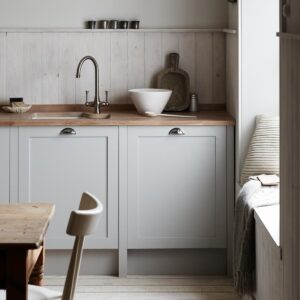
Although wooden worktops look beautiful on first installation, you need to prepare yourself from ongoing maintenance! If you have a busy family kitchen, it is not typically recommended to opt for the wooden option. Although wood tends to be sturdy, and not chip, it can scratch and water and food will mark if not wiped up immediately.
Marks can be sanded out, however wooden surfaces tend to need oiling twice a year – this can be a lot to fit into a hectic family life!
Laminate worktops have come along way in the last few years, they have become a much more realistic mimic of stone and wood worktops. Also squarer edges help to give a more expensive feel.

Laminate worktops are the most cost effective worktop, but they do come with their restrictions – they can be easily marked and scratched which cannot be repaired. They are also limited on the lengths and widths available, leaving them difficult to use on large islands and mean you will need lot of joins in a kitchen with many corners.
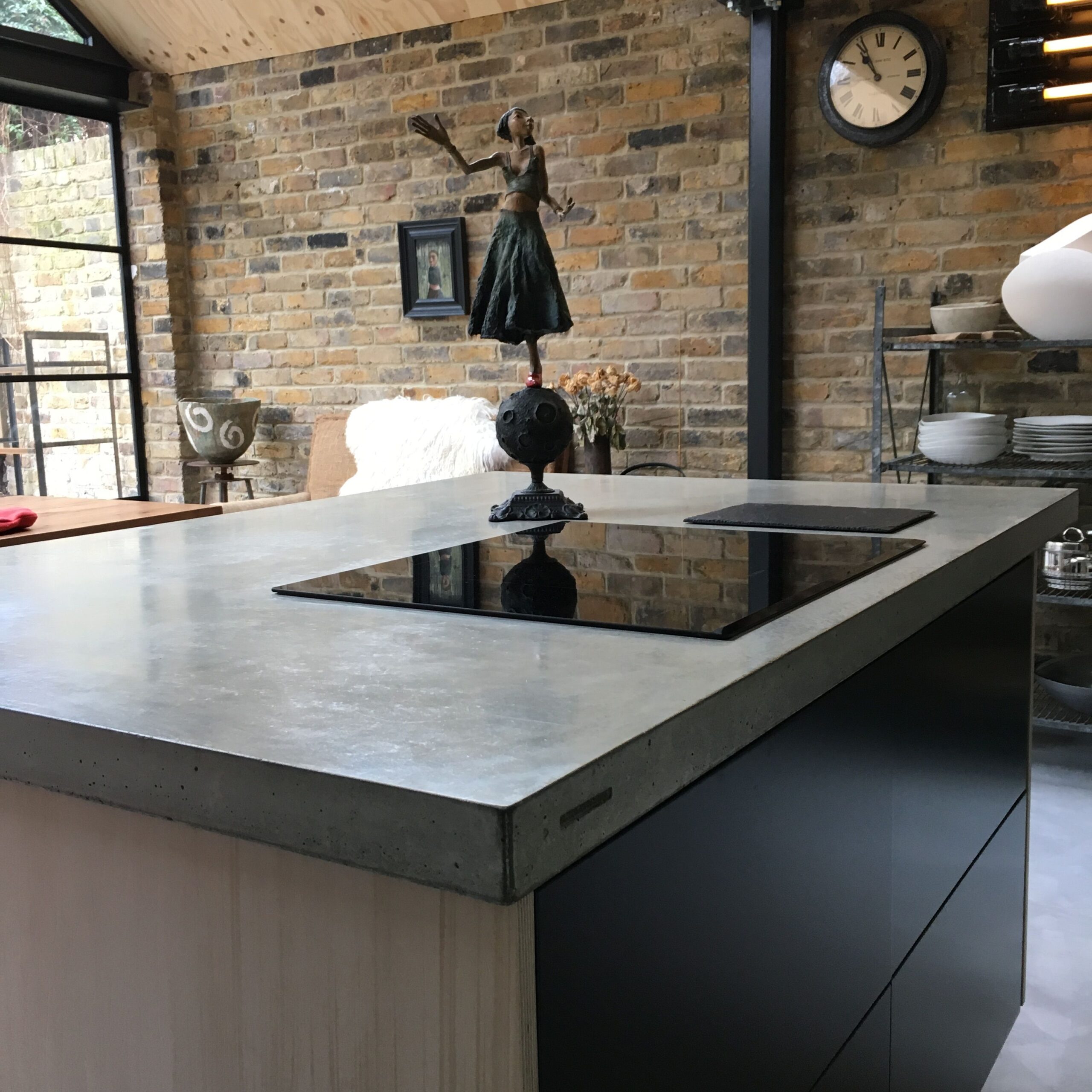
There are of course are many other alternatives, Marble, creating a definite WOW factor, Concrete, for a more industrial style and a little more unusual, Copper, adding a slick edge to any scheme.

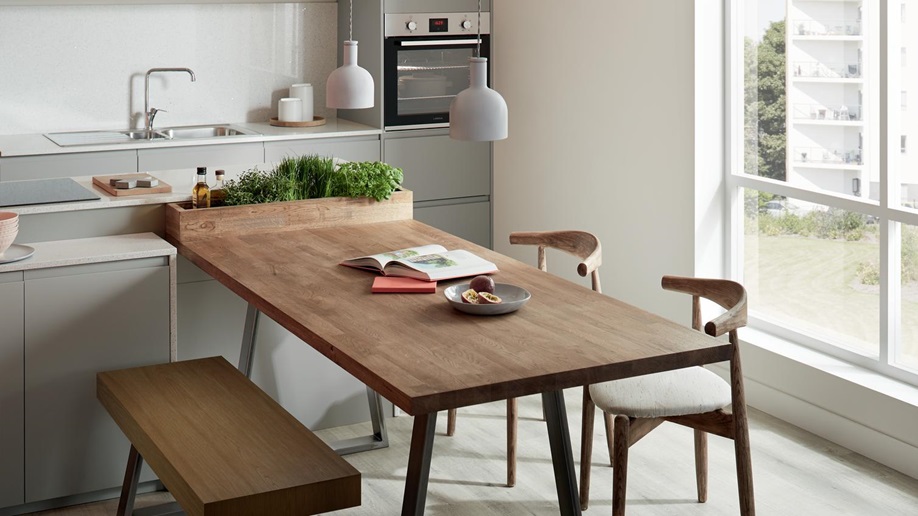
But of course, you are not limited to one material in one kitchen! Why not mix up the materials, use an engineered stone on an island layered with a warm oak breakfast bar area to add texture and depth!
Doors
There are many options on door / drawer fronts to consider when designing your dream kitchen. Think about the style of the rest of the property, is it a country cottage? A Georgian townhouse? Are you in a new build house or apartments?
For a more traditional look then the shaker door is the go too – however dirt does settle in the grooves!

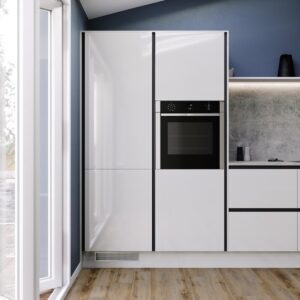
For an easy to clean, more contemporary feel, opt for the smooth slab front, now available in the common gloss finish or a more subtle, finger print forgiving matt effect.

The handleless door has developed over the last few year! Typically the handleless option mean the ‘J’ handle, which is a magnet for crumbs! and can be difficult to open heavier drawers / integrated appliances.

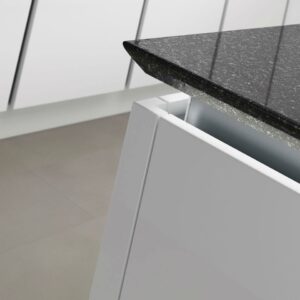
We now have a ‘True Handleless’ alternative, this is a slab front door which sits slightly short in height or width, the unit is created with a slight recess which allows your fingers behind to pull open. Decorative trims are often added to the unit over to conceal the gap between the door and worktop. Often available in black, copper and aluminium, allowing you to create a feature of it.
Storage is key!
When planning your kitchen, it is important to Assess all your needs, look around your current kitchen, what items do you have out on your work tops? kettles, coffee machines, microwaves etc. What items are in your cupboards? Do you use and need all the items? Do you require additional items?
When planning the layout of the kitchen it is important to know what and how much you are trying to store away, there is no point designing a kitchen around items you will not be keeping.
If your budget allows, you may wish to look at a more bespoke kitchen, designed and built to your specific needs, often made from timber cabinets and hardwood frames and doors. With a bespoke design you can get creative with your storage ideas, perhaps knife drawers, drawers for coffee capsules, larder units or drawers with spice racks. Even if you’re working with a tighter budget, there are many handy options now available in standard mdf unit ranges.
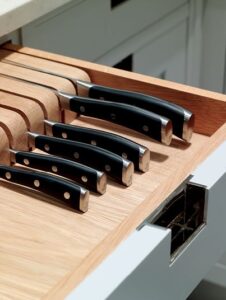
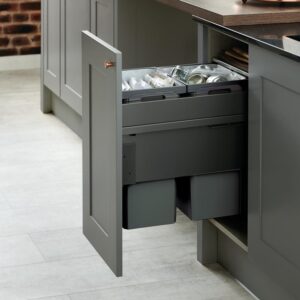
Things to consider are, integrated bins, nothing ruins a beautiful new kitchen than a bin in the corner!
 Internal cutlery drawers, allow a more seamless finish, which less drawer fronts on show.
 Deep pan drawers, are a much more practical solution than cupboards, allowing easy access to all items stored away.
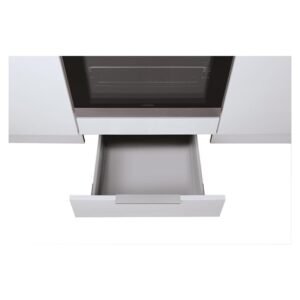
 In smaller kitchens, make use of dead space and add Plinth Drawers, great storage for the additional trays you only bring out at Christmas!
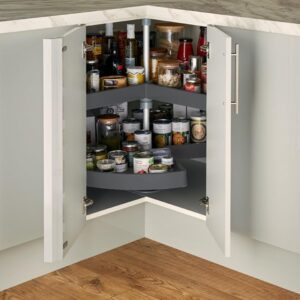
Do not leave voids in the corners of the kitchens, by adding Corner Units ensure every inch of the kitchen is being utilised! However standard units can be tricky to access, so consider adding Pull out units or carousels for ease of use.

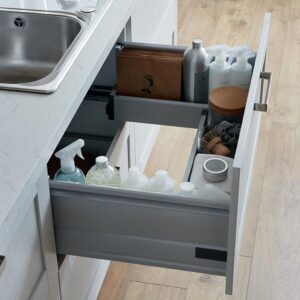
And don’t forget about the dreaded under sink unit! The cupboard which always seems to end up in chaos throughout the busy week! By adding a sink drawer means that it is very easy to keep all those cleaning products and marigolds organised!
Good Work Flow
Potentially one of the most important functionality considerations when it comes to the layout is the ‘Working Triangle’. This defines the distance between the sink, fridge and oven, which should from a triangular shape across the kitchen. The benefits getting the triangle right is that it ensures there is adequate space to perform the specific tasks in each area, whilst being conveniently located to other essential items. Check out your current kitchen – the distance between element should be 1.2m – 2.7m
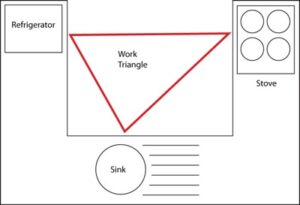
The sink should also always be located next to the dishwasher and bins, ovens/ hobs, should have plenty of worktop space around for preparing food in a clean area and placing hot items down.
Including centre islands in larger kitchens has become increasingly popular in large spaces, with the growing desire for open plan living. If the space allows, this is a great opportunity to add additional storage as well as a breakfast bar area, allowing a more sociable space. However it is important to ensure you consider where you will place items such as microwaves, kettles coffee machines, toasters, etc, especially if you opt for full height banks of units on your walls, and therefore reducing counter space.
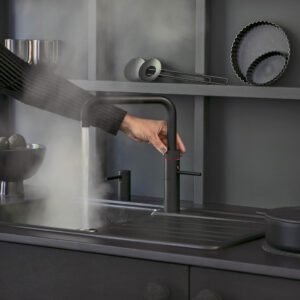
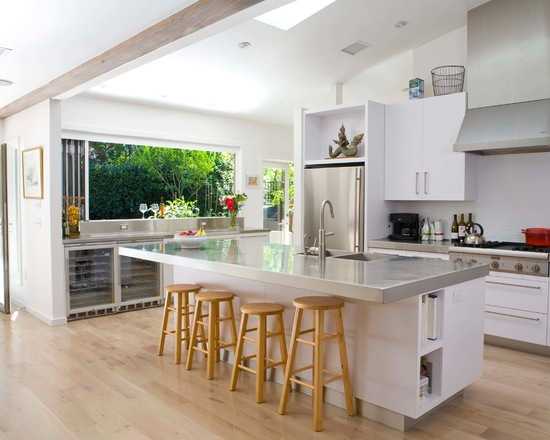 Consider integrated appliances, to allow for minimal items on the work top and Quooker taps are a great alternative to the kettle!
Lighting
Lighting can really set a kitchen apart, it is important to consider this at the beginning of your renovation so your electrician get install feeds at the correct points.
Layered, flexible lighting is key to ensure the correct feel can be achieved throughout the day. It is important to have adequate over head lighting for tasks such as cooking and cleaning, however under cupboard lighting is also critical to light specific task areas. Having these on separate circuits allows you to lower the light levels in the evening, with the under cupboard lighting offering a softer glow.

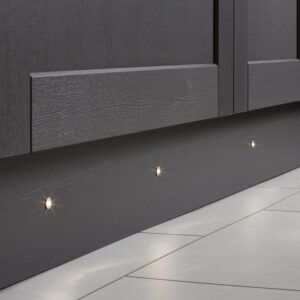
Plinth lighting is also a fantastic way to create an atmospheric feel in the evenings. Installing motion sensors to a plinth or strip lighting under the lip of the worktop is a great feature to have in the evenings when popping into the kitchen for your secret chocolate stash!
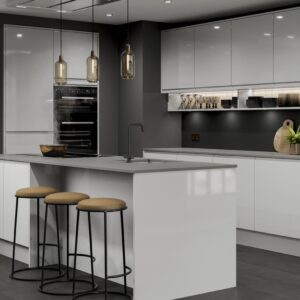
If you do go for a centre island, think about dropping 2 or 3 decorative pendants over the island. These are great to add another layer of design and you can really create a wow factor with your choice of fitting.
Those last touches
The finishing touches can transform a kitchen entirely! Your choice of door handles can elevate the design dramatically.
If you have chosen dark units, touches of gold, brass or copper will add an opulent feel.

If you have opted for a lighter unit, perhaps add depth with matt black handles.
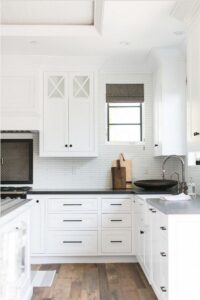
Size can also dramatically change the feel, cup handles on drawer units and smaller knobs on cupboards adds a nod towards a more traditional style.
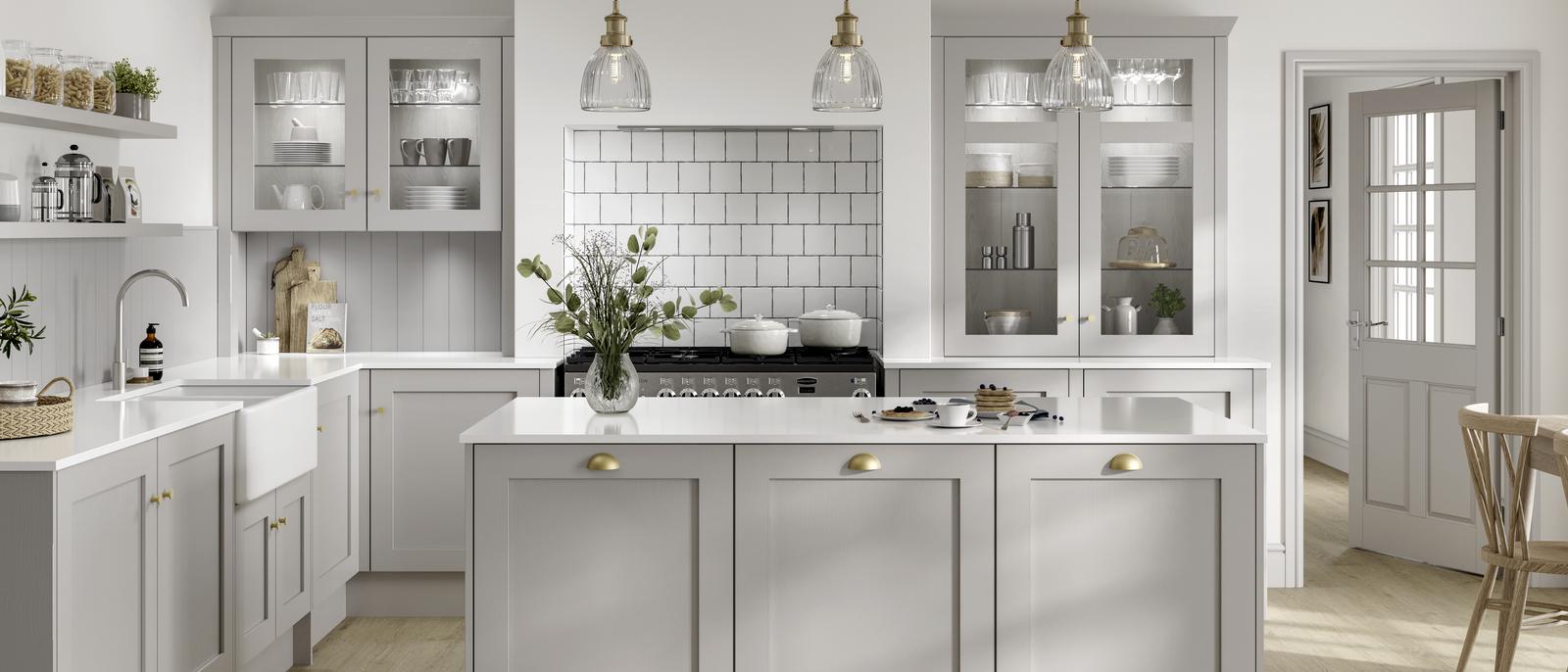 Why not make a talking point of the handles and install large bar handles which really stand out against the units behind!
 So there is our guide to planning a kitchen. Of course the best way, is to call in the experts!!